How to Compare Agricultural Input Prices Without Calling Multiple Suppliers Rachel Wright 7 days...
AI in Agriculture: Practical Applications for Growers
-
Rachel Wright

- 7 days ago
- 3 min read
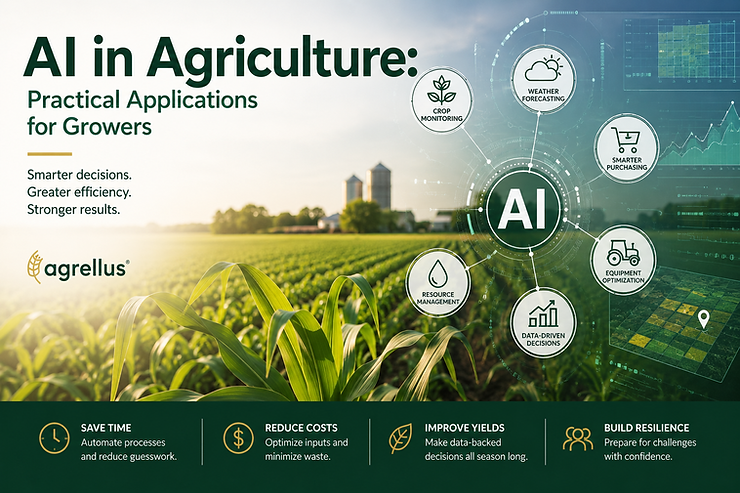
Artificial intelligence (AI) is quickly becoming part of everyday agriculture. While the term "AI" may sound futuristic, many growers are already using technology powered by AI—sometimes without even realizing it.
From precision farming and crop monitoring to equipment optimization and purchasing decisions, AI is helping farmers work more efficiently while making better use of time, resources, and data.
Rather than replacing the experience and expertise of growers, AI serves as another tool to support informed decision-making.
What Is AI in Agriculture?
Artificial intelligence refers to computer systems that can analyze large amounts of information, recognize patterns, and provide recommendations or automate certain tasks.
In agriculture, AI helps transform data into actionable insights that support better management decisions throughout the growing season.
Today, AI is being integrated into many of the tools growers already use.
1. Precision Crop Monitoring
Satellite imagery, drones, and field sensors can now monitor crop health throughout the season.
AI analyzes this information to identify:
Crop stress
Nutrient deficiencies
Disease risk
Pest pressure
Irrigation needs
Instead of walking every acre, growers can prioritize areas that need attention first.
2. Smarter Input Purchasing
One of the most practical uses of AI is helping growers make more informed purchasing decisions.
AI-powered platforms can help organize information, compare options, and simplify the process of evaluating agricultural inputs.
Rather than spending hours gathering information from multiple sources, digital tools can make it easier to compare products, pricing, availability, and supplier responses.
As technology continues to evolve, AI will play an increasingly important role in helping growers make faster, more informed purchasing decisions.
3. Predictive Weather and Risk Analysis
Weather has always influenced farming decisions.
AI can analyze:
Historical weather patterns
Current forecasts
Soil moisture
Crop growth stages
This allows growers to better plan:
Planting
Irrigation
Fertilizer applications
Crop protection timing
Harvest scheduling
While no forecast is perfect, AI can help improve planning by identifying trends and potential risks.
4. Equipment Performance
Modern equipment collects an enormous amount of operational data.
AI can help identify:
Fuel inefficiencies
Maintenance needs
Equipment downtime risks
Route optimization
By addressing potential issues early, growers may reduce unexpected downtime during critical seasons.
5. Data-Driven Decision Making
Today's farming operations generate more data than ever before.
AI can help organize information from:
Yield monitors
Soil tests
Weather stations
Machinery
Financial records
Field observations
Instead of reviewing each source independently, AI helps identify patterns that support better long-term planning.
AI Supports Growers—It Doesn't Replace Them
Technology continues to improve, but successful farming still depends on the experience, knowledge, and judgment of growers.
AI is simply another resource that can help simplify complex decisions by providing faster access to relevant information. Growers remain at the center of every decision.
The Future of AI in Agriculture
As artificial intelligence continues to advance, growers can expect even more tools that improve efficiency, transparency, and operational planning.
Future applications may include:
Enhanced yield forecasting
Automated crop scouting
Smarter inventory management
Supply chain optimization
Personalized purchasing recommendations
Improved sustainability reporting
The goal isn't simply adopting new technology—it's helping growers make confident decisions while improving profitability and efficiency.
Final Thoughts
Artificial intelligence is no longer a concept for the future—it's becoming a practical tool for agriculture today.
Whether it's monitoring crop health, optimizing equipment, improving planning, or simplifying purchasing decisions, AI is helping growers work more efficiently while maintaining control over the decisions that matter most.
As agriculture continues to evolve, combining grower expertise with intelligent technology will help build a stronger, more resilient future for farming.
Frequently Asked Questions
Is AI replacing farmers?
No. AI is designed to support growers by providing insights and automating repetitive tasks. Decisions about crops, equipment, and operations remain in the hands of farmers.
How is AI used in farming today?
AI is used for crop monitoring, weather forecasting, equipment maintenance, precision agriculture, yield analysis, irrigation management, and purchasing support.
Can AI help reduce farm costs?
AI can help improve efficiency by identifying trends, optimizing resource use, reducing waste, and supporting more informed purchasing and operational decisions.
Do small farms benefit from AI?
Yes. Many AI-powered tools are available through software platforms, equipment, and digital services that can provide value for operations of all sizes.